

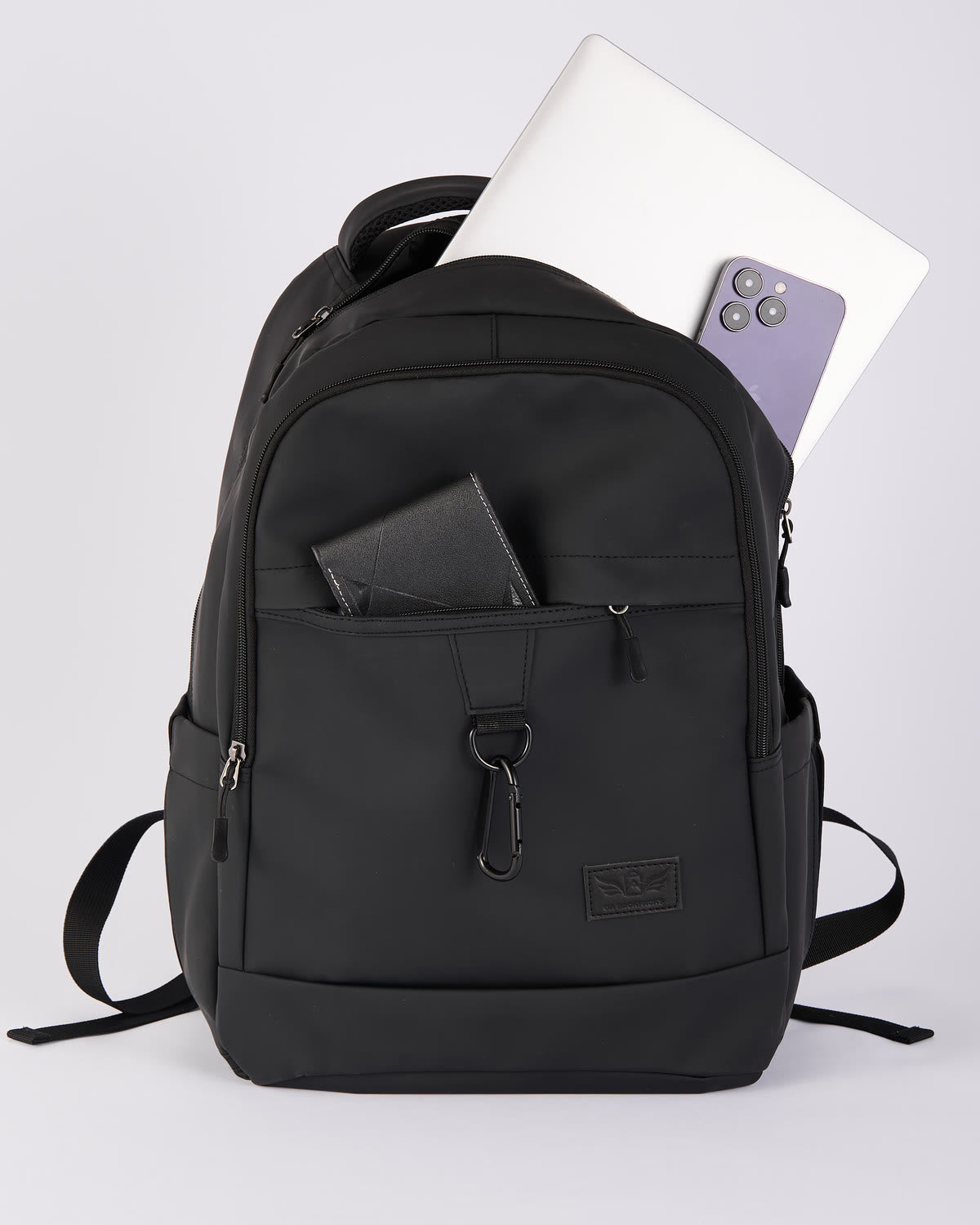
An everyday kit cannot hold the full several-day household supply Ready.gov recommends. Its narrower purpose is to make a delay, changed pickup, power outage or disrupted route easier while the person follows school, workplace, transit and emergency instructions.
Short answer: Start with communication, water, a suitable snack, light, power and personal necessities. Keep the load small, follow school rules and treat medical or accessibility supplies as an individual planning question—not a generic checklist.
Begin with the real routine
Consider the trip length, transportation, weather, supervision, individual support needs, supplies already available and rules at school or work. A commuter with a long rail trip may prioritize phone power and walking comfort. A younger student may need only a contact card, approved snack and comfort item because the school manages the rest.
A compact core kit
1. Paper contact card
Carry essential caregiver numbers, an out-of-area contact and the family’s meeting points. A paper card still works when a phone does not.
Keep the information minimal. Do not include financial account numbers, passwords, government ID numbers or a complete medical history. For a child, confirm that the school permits a card and reinforce that the child stays with staff rather than leaving to reach a meeting point.
For a privacy-conscious planning approach, see A Calm Family Preparedness Plan for School and Commuting.
2. Water appropriate to the routine
Ready.gov includes water in its basic disaster-supply list. For daily carry, choose an amount the person can comfortably carry and refill rather than trying to reproduce a household water supply in a backpack.
Use a leak-resistant bottle, check it regularly and keep it away from electronics or paper records. Follow school rules about bottle type and use.
3. One or two shelf-stable snacks
Choose familiar food that tolerates the expected temperature and complies with school, workplace and allergy rules. Check the label, packaging integrity and expiration date. Avoid giving food to other people unless a responsible adult confirms it is safe for them.
A snack is for a delay, not a replacement for the several-day food supply Ready.gov recommends for a larger household kit.
4. A small flashlight
A compact flashlight can be useful in a power outage, stairwell or dark commute. Choose a simple model the person can operate. Protect the switch so it does not turn on inside the bag, and inspect batteries for leakage.
A phone light is helpful, but using it can consume power needed for communication.
5. Phone power for people who carry a phone
A short charging cable and a small, reputable power bank may be useful for an older student or adult. Check airline, school and workplace rules, follow the maker’s charging and storage instructions and stop using a battery that is swollen, damaged, unusually hot or recalled.
Charge it on a routine rather than assuming it is ready. A paper contact card remains important even when a battery is packed.
6. Basic hygiene items
A few personal items may make an extended wait more comfortable:
- tissues;
- a small amount of hand sanitizer, if permitted and age-appropriate;
- menstrual products;
- a spare face covering if part of the person’s health plan or preference;
- a small packet of wipes.
Keep liquids sealed in a separate pouch. Avoid adding so many “just in case” items that the kit becomes daily clutter.
7. Weather and walking basics
Depending on the season and route, consider a light layer, rain protection, sun protection or spare socks. Comfortable footwear matters more than unfamiliar specialized gear. Ready.gov suggests keeping comfortable walking shoes in a workplace grab-and-go case.
8. A small comfort or communication item
A younger child might carry a familiar card, small toy or family photo if the school allows it. A person who communicates differently may need a compact communication card, low-tech board or backup recommended by their support team.
The goal is not distraction from instructions. It is a familiar aid during an unexpected wait.
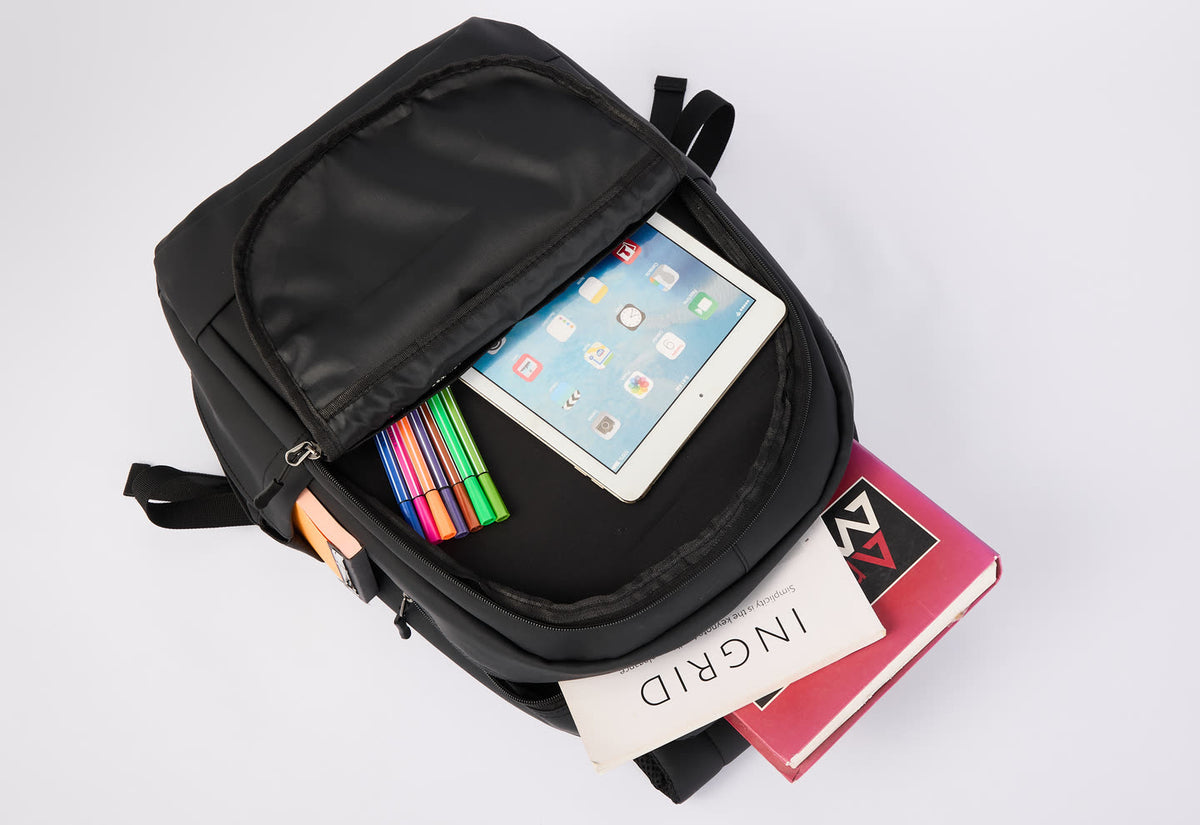
Medical items require an individual plan
Ready.gov tells households to account for prescriptions and medical needs. The American Academy of Pediatrics also recommends planning medication supplies and keeping accurate information about what a family member takes.
That does not mean every child should carry medication in a backpack. Many schools regulate who may possess, store or administer medicine. Temperature, expiration, dosage and access all matter.
Coordinate with the school, childcare provider, employer and healthcare professional. The plan may involve medicine held by a nurse, self-carry authorization, an adult grab list or a separate emergency supply. Use original packaging and written instructions as required. Never change a prescription supply or dosing plan based on a generic packing list.
The same individualized approach applies to inhalers, epinephrine, diabetes supplies, mobility equipment, hearing-device batteries and other essential supports.
Items that may not belong in a school or daily kit
Some items on a full household checklist are unsuitable for unsupervised or daily carry. School policies may prohibit tools, blades, matches, certain first-aid supplies, medicines or large batteries. Heavy food and water stores belong at home, work or another designated location.
Before packing, remove anything that is:
- prohibited by the school, employer, transit provider or venue;
- too heavy for comfortable daily use;
- unfamiliar to the carrier;
- expired, leaking or damaged;
- unsafe for the person’s age;
- likely to worsen an allergy or medical risk;
- dependent on training the person does not have.
A kit should support responsible instructions, not encourage a child to act as an emergency responder.
Keep the kit comfortable enough to carry
Pack dense items close to the back, keep hard objects from pressing into the wearer and separate liquids from electronics. Test the loaded bag on a normal walk. If it changes posture, causes discomfort or makes stairs difficult, reduce it; discuss persistent fit or pain concerns with a qualified healthcare professional.

Use a two-layer system
Keep contact information, modest water, a suitable snack, light and personal basics in the daily kit. Keep the larger household supply, workplace case, appropriate vehicle supplies and school-managed medical items in their designated locations. Ready.gov recommends planning supplies for home, work and cars because family members may be in different places.
Ten-minute seasonal check
Review the kit at the start of each school term or season:
- [ ] Contact numbers and meeting points are current.
- [ ] School or workplace policy has not changed.
- [ ] Snacks are in date and still meet allergy rules.
- [ ] The water bottle is clean and leak-free.
- [ ] Flashlight works; batteries show no damage.
- [ ] Power bank and cable work and have no recall or damage issue.
- [ ] Clothing matches the season.
- [ ] Medical and accessibility plans are current.
- [ ] Nothing unnecessary has accumulated.
- [ ] The loaded bag remains comfortable to carry.
Preparedness is not measured by how much a person carries. It is measured by whether the plan, supplies and setting work together. Start small, follow policy and keep the kit ordinary enough to be maintained.
For communication and reunification planning, continue with A Calm Family Preparedness Plan for School and Commuting.
Sources
- Ready.gov, “Build A Kit”: https://www.ready.gov/kit
- Ready.gov, “Emergency Supply Kit Checklist” (PDF): https://www.ready.gov/sites/default/files/2024-05/ready_supply-kit-checklist.pdf
- Ready.gov, “Make A Plan”: https://www.ready.gov/plan
- Ready.gov, “Emergency Plan for Commuters” (PDF): https://www.ready.gov/sites/default/files/2020-03/commuter_emergency_plan.pdf
- HealthyChildren.org (American Academy of Pediatrics), “Disasters and Your Family: Be Prepared”: https://www.healthychildren.org/English/safety-prevention/at-home/Pages/Getting-Your-Family-Disaster-Ready.aspx