

Preparedness conversations can become too dramatic too quickly. Families do not need to rehearse every possible emergency. They need a few clear decisions that are easy to remember when phones, transit or normal routines stop working.
Ready.gov recommends building a family emergency plan and making sure children know who to call and where to meet. That can be done in one short conversation.
Choose two meeting points
Pick one location close to home and another outside the immediate neighborhood.
The nearby location is useful if the family has to leave the house because of a fire, gas leak or building problem. The second location is for situations where roads, transit or police activity make the neighborhood difficult to reach.
Use places everyone can identify without a map. A familiar library entrance, community center or relative's home is easier to remember than a random intersection.
Write both locations down. Do not rely on everyone remembering a conversation from six months ago.
Pick an out-of-area contact
During a local emergency, calling someone outside the affected area can be easier than reaching people nearby. Choose one relative or trusted friend who agrees to act as the family contact.
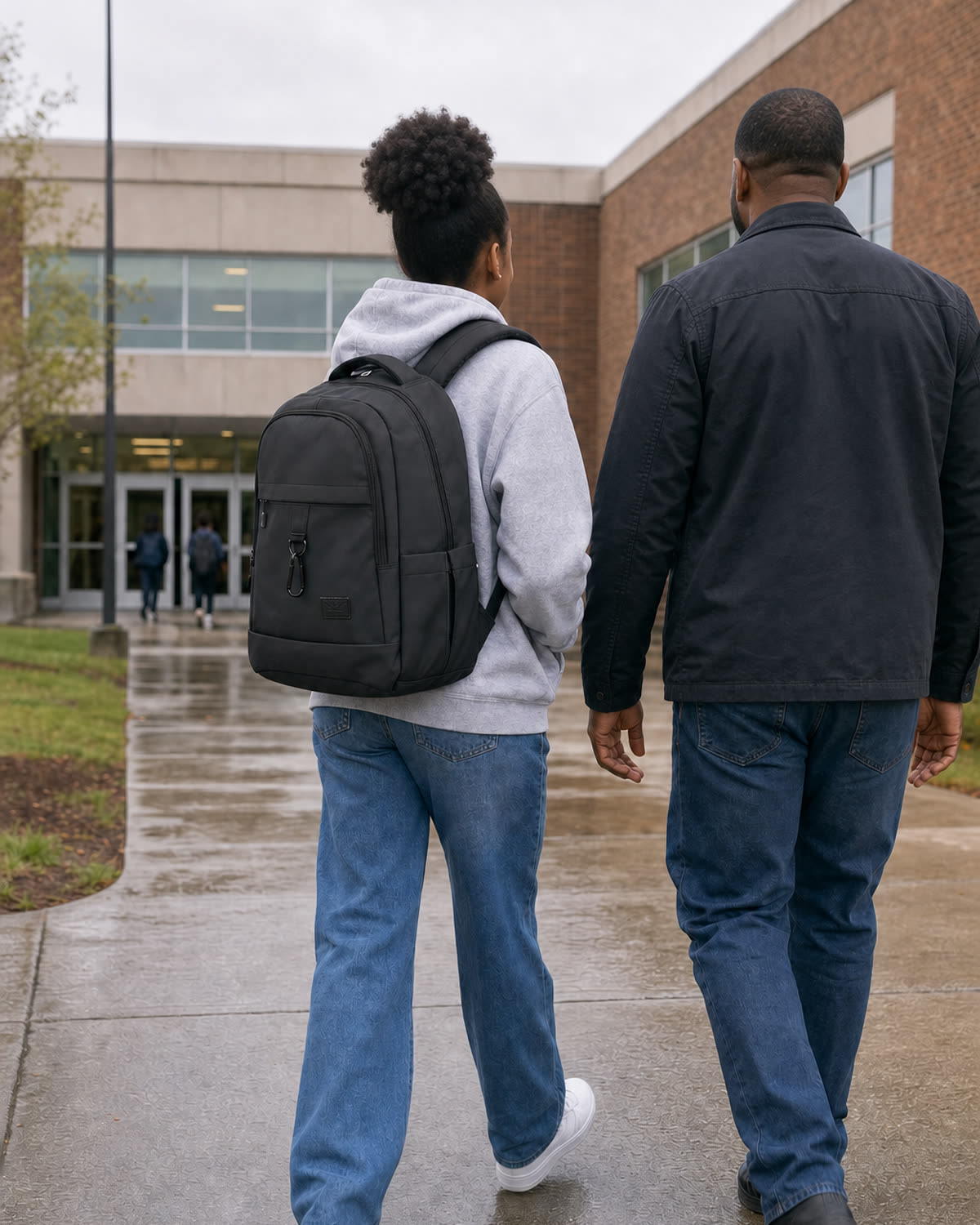
Every family member should have that person's name and number. Younger children should know when to give the card to a teacher, police officer or another trusted adult.
A paper contact card still works when a phone battery does not. Keep one in the backpack and another in a wallet or coat pocket.
Know the school or workplace plan
Schools, universities and workplaces may use different procedures for lockdowns, evacuations, severe weather and reunification. Find out:
- how emergency notifications are sent
- who is allowed to pick up a student
- where reunification takes place
- whether students can use phones during an incident
- how medication or accessibility needs are handled
Parents should avoid racing to a school before understanding the official instructions. An unexpected arrival can add congestion or conflict with the school's process.
Keep the everyday kit small
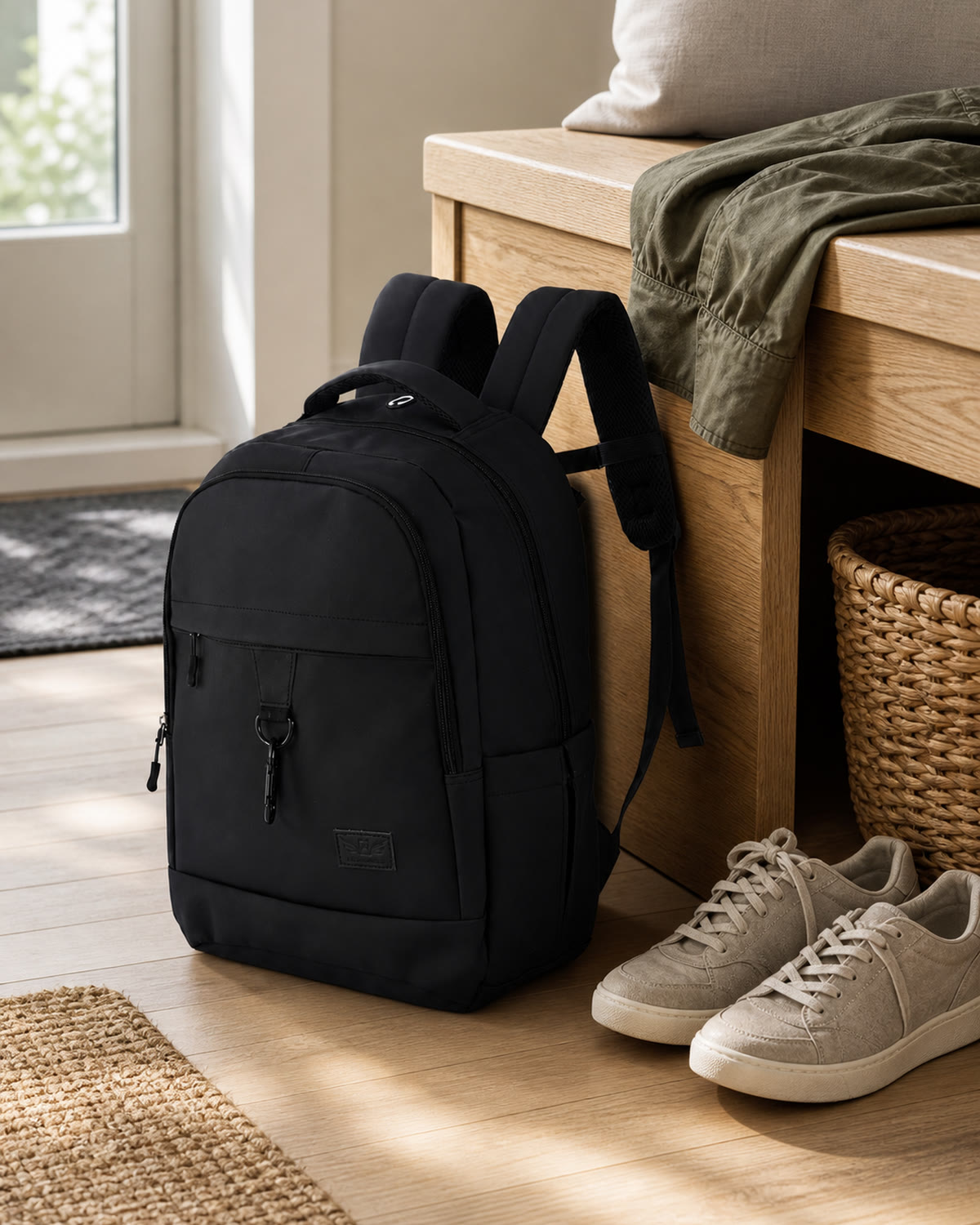
An everyday backpack is not a disaster-supply warehouse. Overpacking makes the bag harder to carry and increases the chance that useful items get buried.
A small everyday kit might include:
- paper contact card
- compact power bank and cable
- small flashlight
- whistle
- transit card or modest emergency cash
- essential medication, following school rules
- a small bottle of water
- weather-appropriate item such as gloves or a light rain shell
Check expiry dates and charge the power bank regularly. Remove items that no longer fit the season or the owner's needs.
Use plain language with children
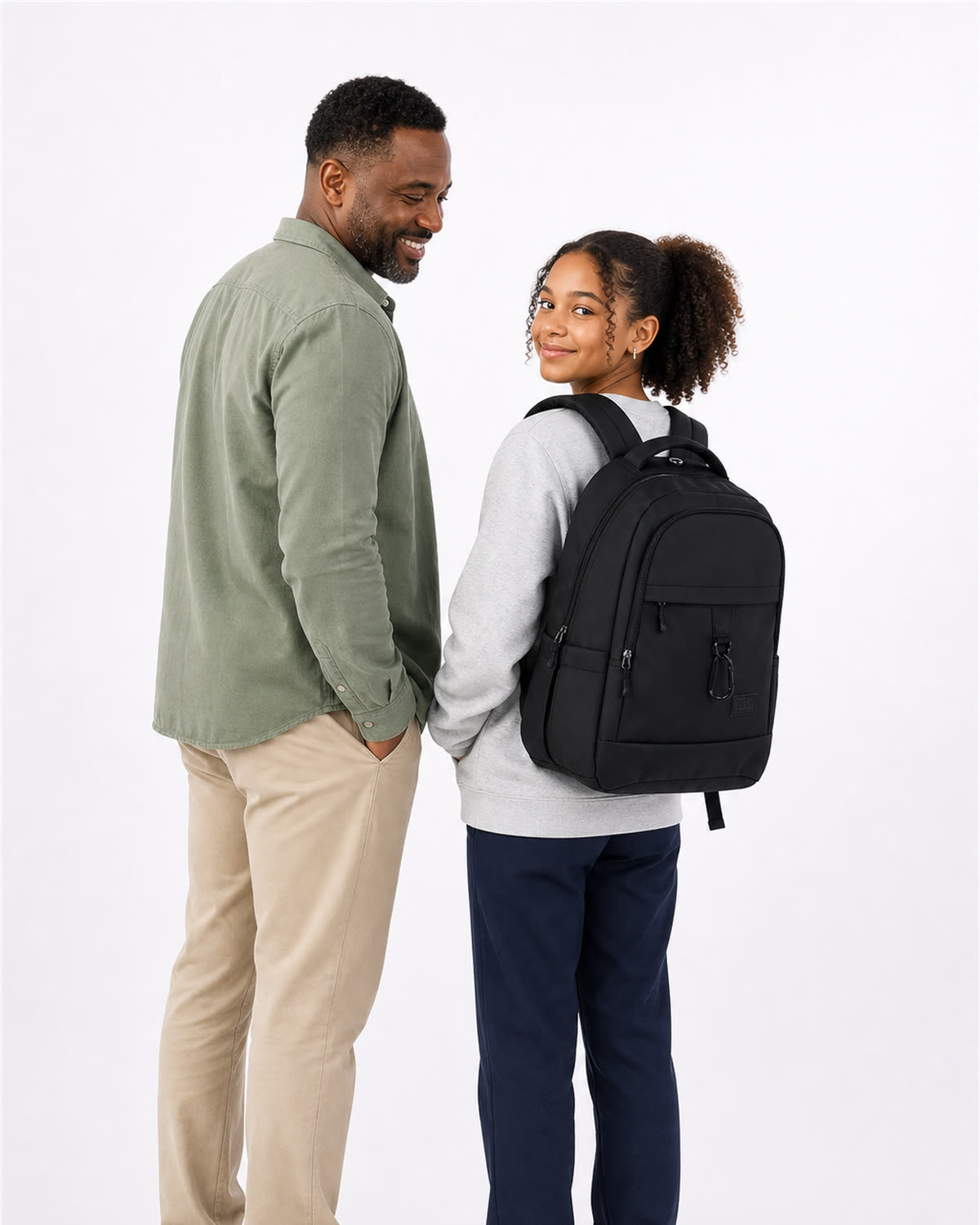
The conversation should match the child's age. Younger children need simple instructions: stay with the teacher, follow directions and use the contact card if asked. Older students can take more responsibility for transit alternatives and checking in.
Avoid making promises that no parent can keep, such as "nothing bad will happen." A calmer message is more useful: emergencies are uncommon, adults have plans, and the family knows what to do if normal communication is interrupted.
Decide how to check in
Text messages may work when voice calls are congested. Agree on a short format:
Safe. At school. Following staff instructions.
The message confirms status without starting a long conversation. Decide who sends the first update and when a second contact method should be used.
Do not encourage a child to leave a supervised location simply because a parent has not replied immediately.
Review the plan twice a year
A plan becomes outdated when a phone number changes, a student moves schools or a transit route closes. Put a short review on the calendar at the start of the school year and again midyear.
The review can take ten minutes:
- Confirm contact numbers.
- Check meeting locations.
- Replace expired kit items.
- Charge the power bank.
- Ask each person to explain the plan in their own words.
Preparedness works best when it feels ordinary. The plan should live quietly in the background, ready if the family needs it.
GA Backpacks is built around the same idea: practical everyday carry with an added layer of preparedness, without tactical styling or fear-based messaging. Explore the everyday design.

Sources
Follow instructions from local authorities, schools and emergency services during an incident.