

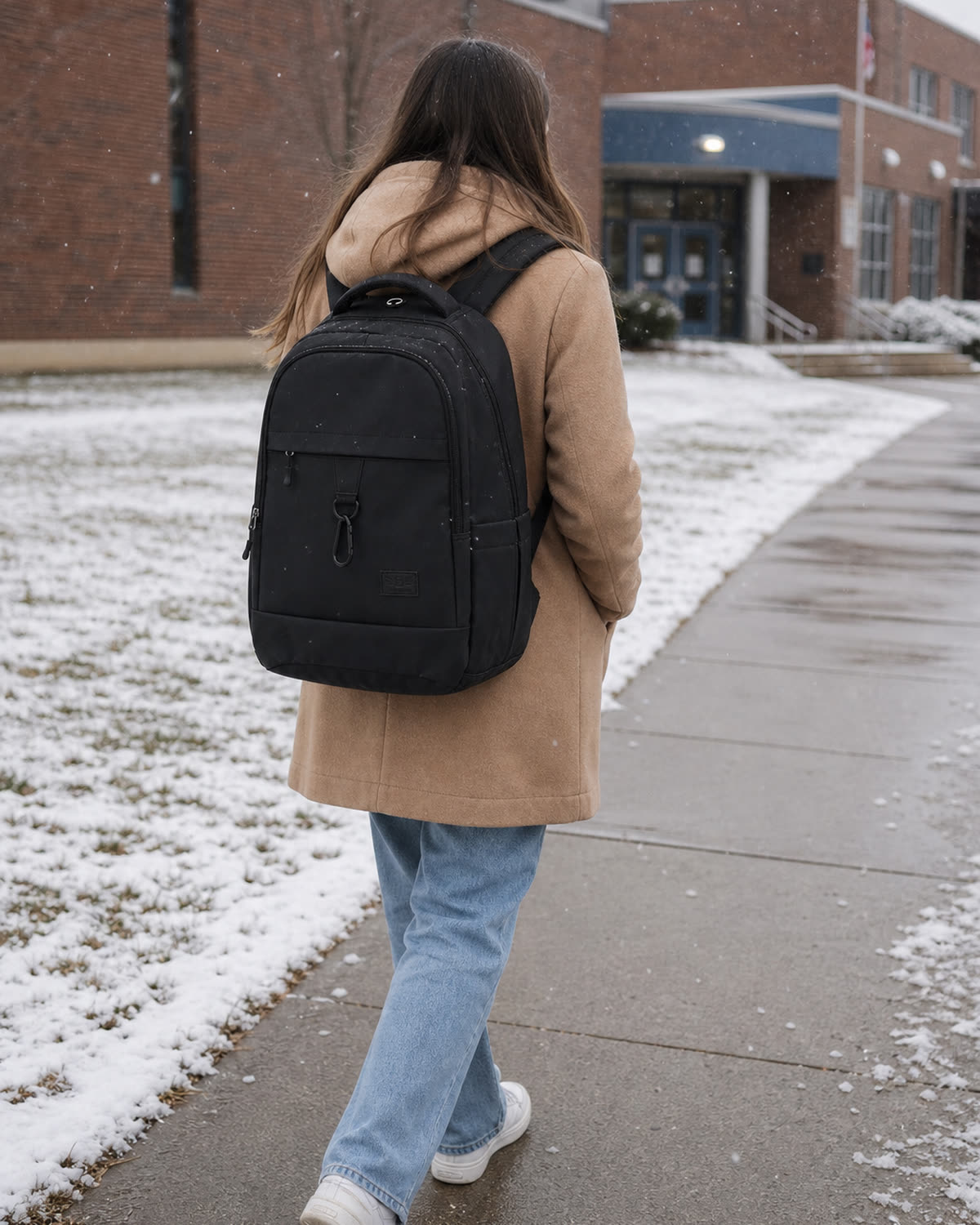
A backpack can have padded straps and a comfortable back panel, yet still feel awkward if it hangs too low or carries too much weight. Fit matters with any bag. It matters even more when the backpack includes heavier materials before you add a laptop, water and books.
The goal is simple: keep the load close, stable and no heavier than necessary.
Start with the total loaded weight
Empty weight is only the starting point. The useful number is what the backpack weighs on a normal Monday morning.
Place the packed bag on a household scale. Include everything that usually travels:
- laptop or tablet
- charger and power bank
- notebooks and textbooks
- water bottle
- lunch
- sports gear
- personal items
For children, the American Academy of Pediatrics advises that a backpack should not weigh more than 15% of the child's body weight. A 100-pound child, for example, should carry no more than 15 pounds under that guideline.
This is general guidance, not a personalized medical limit. If a child experiences pain, numbness, tingling or persistent discomfort, stop adjusting the bag and speak with a qualified health professional.
Use both shoulder straps
One-strap carrying places the load unevenly. Both straps should be worn and adjusted to roughly the same length.
The straps should feel secure without digging into the shoulders. If the bag swings as the wearer walks, tighten each side a little at a time. If the straps pull the shoulders backward or feel restrictive, loosen them slightly and review the total weight.
Wide, padded straps distribute pressure better than thin straps. Padding cannot compensate for an overloaded bag, but it can make a reasonable load more comfortable.
Keep the bag close to the back
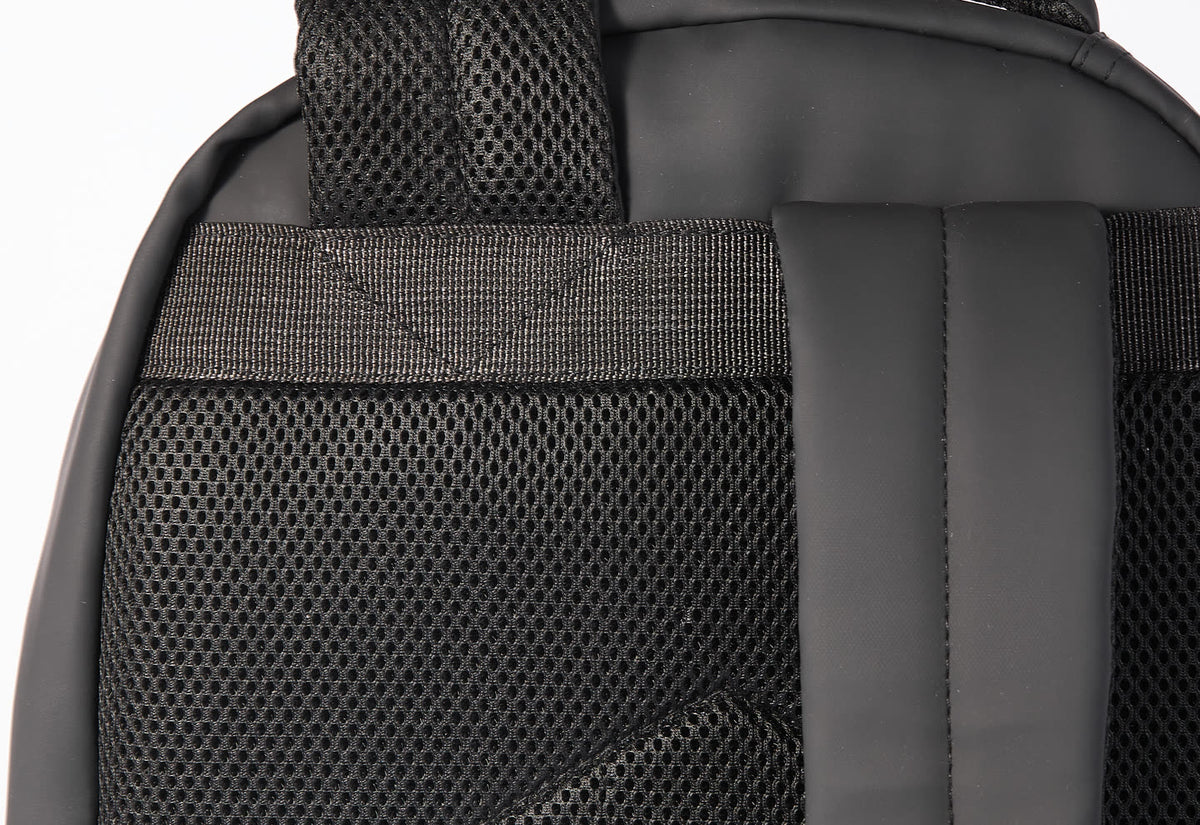
A backpack that hangs away from the body creates more leverage and can feel heavier than the scale suggests. Adjust the shoulder straps so the back panel sits close to the torso.
The bottom should generally rest around the lower back rather than hanging well below the waist. Exact fit varies with torso length and bag shape, so use comfort and stability as the guide.
If the backpack has a chest strap, fasten it at a comfortable height. It can help keep the shoulder straps from sliding outward, especially over a winter coat. It should not restrict breathing or pull the straps tightly into the neck.
Put dense items near the center of the back
A laptop, hardcover book or full water bottle has more influence on balance than a sweater. Place dense items close to the back panel and near the vertical center of the bag.
Use the laptop sleeve for the device it was designed to hold. Keep smaller items in dedicated pockets so they do not collect at the bottom. If the bag leans to one side, check for an uneven water bottle, charger or stack of books.
Items that are needed throughout the day should remain easy to reach. Repacking the entire bag at every class increases the chance that weight ends up in the wrong place.

Remove what is not needed
The fastest way to improve comfort is often to carry less.
Once a week, empty the backpack completely. Old papers, duplicate chargers, half-full notebooks and forgotten bottles add weight without adding value. For students, compare the next day's schedule with what is packed. Digital copies or school storage may reduce the need to carry every book at once.
Do not remove or modify any built-in protective component. Weight reduction should come from everyday contents, not from changing the product structure.
Adjust for winter clothing
A bag fitted over a T-shirt may sit differently over a thick coat. Loosen both straps before putting the backpack on, then tighten them evenly. Check that buckles remain fully engaged and that the straps are not twisted.
Snow and rain can also add surface moisture. Wipe the exterior after the trip and allow the bag to air dry indoors. Do not place protective materials on a heater or use high heat to speed drying unless the manufacturer explicitly allows it.

Check the fit in motion
A stationary mirror check only tells part of the story. Walk for several minutes, climb stairs and sit down with the loaded bag.
A reasonable fit should not cause the backpack to:
- swing sharply from side to side
- pull one shoulder lower
- press hard into the neck
- interfere with arm movement
- force a pronounced forward lean
- create numbness or tingling
Adjust one variable at a time. Change the strap length, repack the contents or reduce weight, then walk again.
Fit is part of daily use
The GA Backpack is designed as a complete everyday bag with an integrated protective system. The current listed empty weight is 1.8 kg. That makes honest load management important, particularly for younger or smaller users.
Check the packed weight, use both straps and keep dense items close to the back. The right bag still needs the right load.
View the GA Backpack's everyday features or see the current product page.
Source
This article provides general backpack-use information and is not medical advice.