


Protective backpacks are difficult to compare because two products can use similar language while providing very different evidence. One page may lead with a dramatic video. Another may list a threat level without explaining the test. A third may focus on materials and say little about the bag itself.
A better comparison starts with seven questions.
1. What exactly was tested?
Start with the model number. Testing performed on an earlier prototype does not automatically describe the product being sold today. Ask whether the tested sample matches the current materials, layer count, dimensions and construction.
A useful test summary should identify the sample, ammunition, velocity, distance, angle, number of impacts and the material placed behind the product. If the seller says deformation was reduced or absent, look for a measurement and method rather than a visual impression.
The NIJ does not certify backpacks. A seller can describe independent or manufacturer testing accurately, but should not represent a backpack as "NIJ certified."

2. What area does the protective system cover?
Threat level is only part of the story. Coverage dimensions matter because a protective panel only affects the area it occupies.
Look for:
- panel height and width
- where the panel sits when the backpack is worn normally
- whether the panel can sag, fold, rotate or be removed
- whether the bag must be positioned in a particular direction
- whether storage contents can change the panel's position
Avoid claims that imply complete protection. A backpack does not cover the entire body, and its orientation changes as it is carried.
3. Is it realistic to carry every day?
A protective system that stays in a closet cannot help during a commute. Daily usefulness comes down to ordinary backpack details:
- empty weight
- strap shape and padding
- chest strap or load-stabilizing features
- breathable back panel
- laptop and device storage
- water bottle and small-item organization
- zipper quality
- weather resistance
- ease of cleaning
Try to evaluate the bag as a backpack first. Protection is an added system, not an excuse for poor comfort or organization.
4. Is the weight stated clearly?
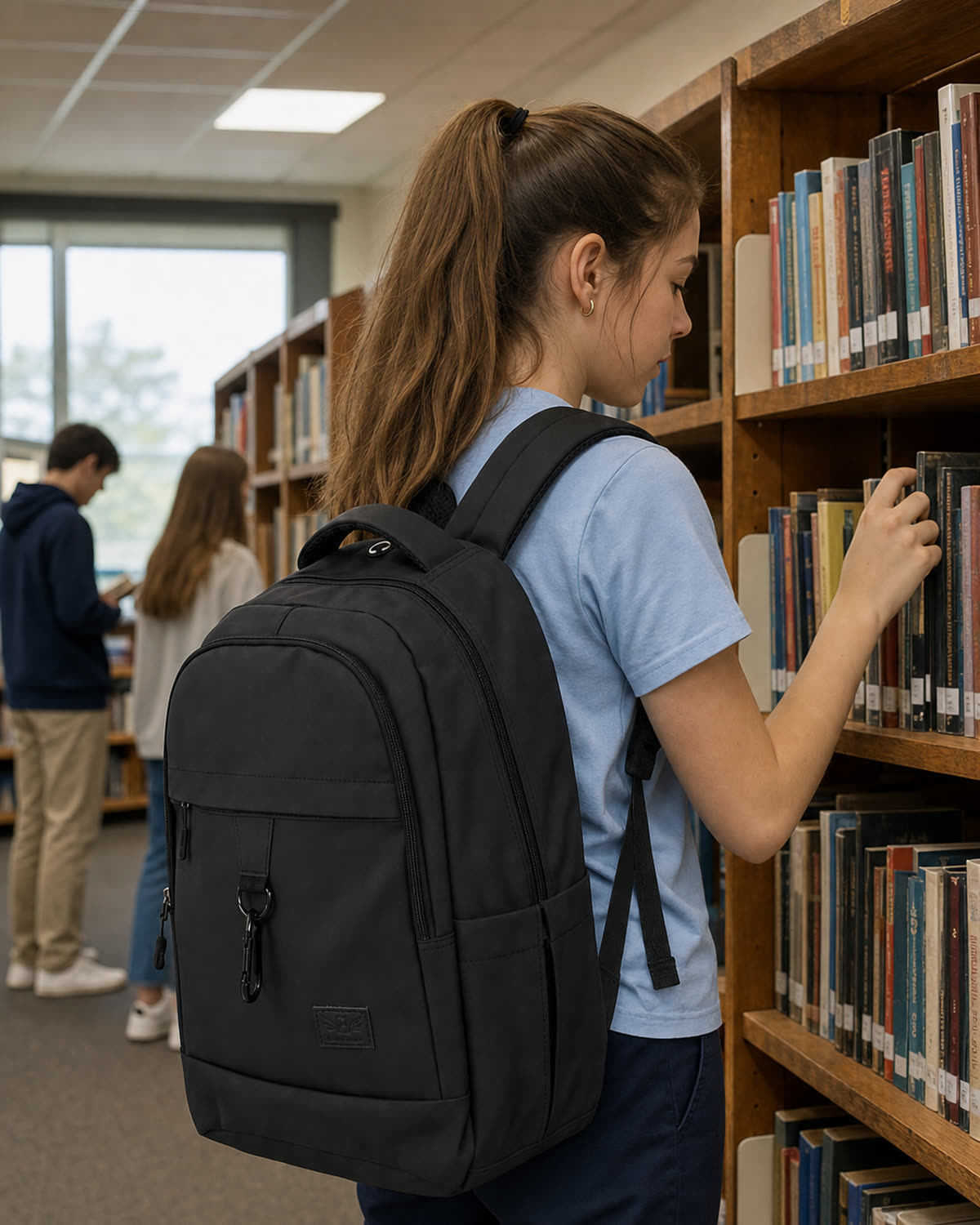
Check whether the listed weight is for the entire backpack or only a removable insert. Then estimate the real carried load after adding a laptop, charger, books, water and other daily items.
For children, the American Academy of Pediatrics advises that a loaded backpack should not exceed 15% of the child's body weight. Fit also matters: both shoulder straps should be used, the pack should sit close to the body, and heavier items should be placed near the center of the back.
A protective backpack starts heavier than an ordinary fabric school bag, so managing the rest of the load is especially important.
5. Are the limits stated as clearly as the benefits?
Responsible product information should explain what the product is not designed for. Depending on the design and evidence, limitations may involve:
- rifle ammunition
- armor-piercing ammunition
- repeated impacts in the same area
- damaged, wet, overheated or altered materials
- unusual angles and edge impacts
- coverage outside the panel area
Be cautious when limitations appear only in fine print. They should be visible wherever the main protection claim appears.

6. What happens after purchase?
Returns and warranty terms reveal how much risk the seller expects the buyer to carry. Before ordering, check:
- return window
- restocking fee
- who pays return shipping
- warranty length and coverage
- replacement process for defects
- whether an impacted product should be retired
- expected service life and inspection guidance
- delivery time, duties and shipment origin
A clear product page should not force you to search four policy pages for these answers.
7. Can you verify the company behind it?
Look for a real support email, response-time expectation, business identity and a detailed product-development story. Reviews are more useful when they include dates, verified purchase status and specific ownership experience.
Round numbers and generic quotes are weak evidence. A smaller set of detailed, attributable reviews is often more credible than a large rating with no visible source.
A simple comparison scorecard
Use a 0–2 score for each category:
- Test evidence: none, partial, or detailed
- Coverage disclosure: vague, estimated, or dimensioned
- Daily carry: poor, acceptable, or well designed
- Weight transparency: unclear, partial, or complete
- Limitations: hidden, incomplete, or prominent
- Commercial terms: restrictive, average, or buyer friendly
- Company transparency: thin, adequate, or strong
The highest-scoring product may not make the loudest claim. It will usually give you the clearest evidence and the fewest unanswered questions.
The GA Backpack product page shows the current everyday-carry design. Our protection-system overview explains how the built-in layers are arranged. Review the documented test conditions and limitations before deciding whether any protective product fits your needs.
Sources
- National Institute of Justice: Body Armor Performance Standards and Compliance Testing
- American Academy of Pediatrics: Backpack Safety
- FTC Policy Statement Regarding Advertising Substantiation
This article is general product-selection information, not a guarantee of protection or personal-safety advice.